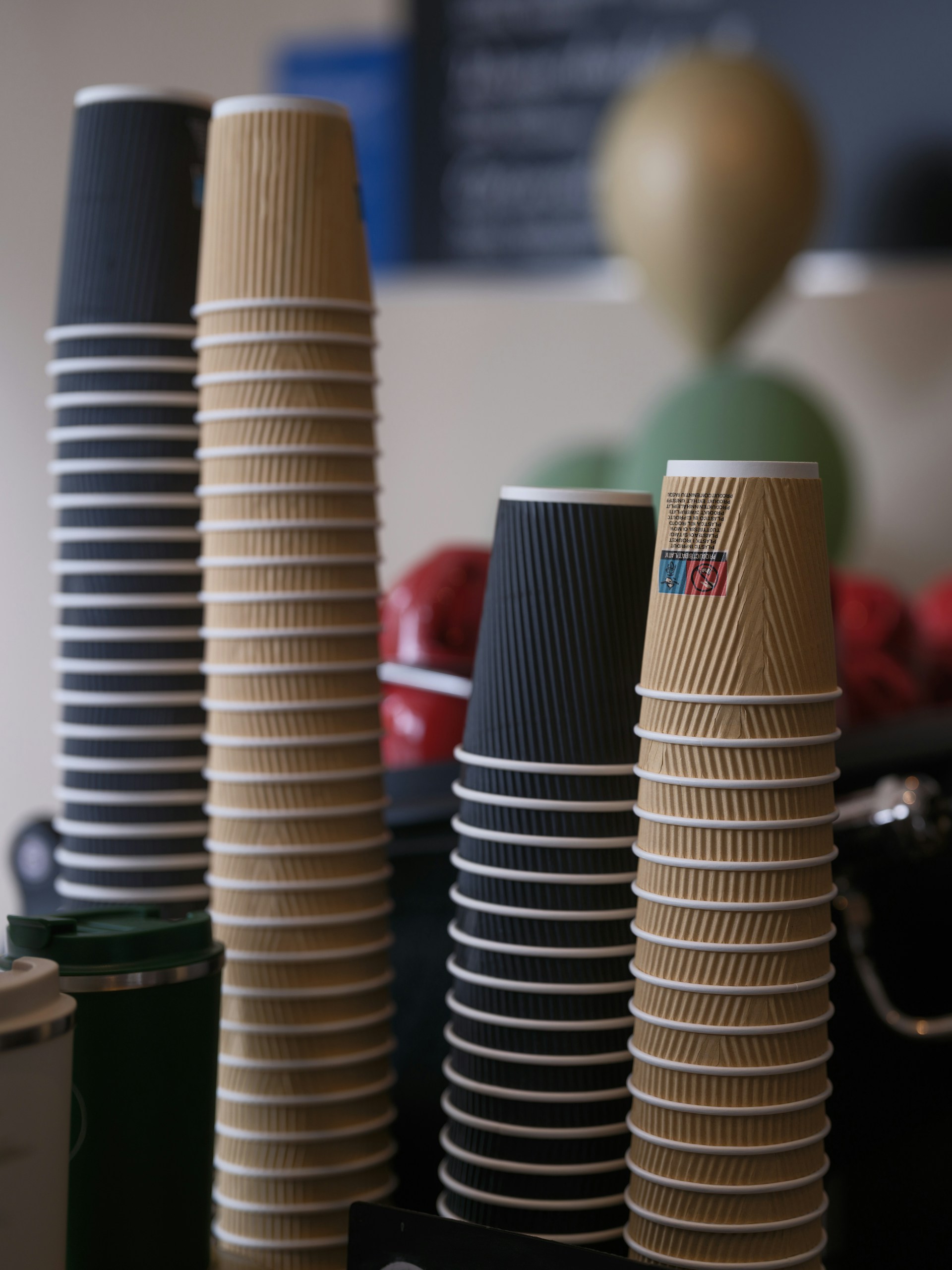
In coffee, details matter. Not just the beans and milk. Even a “simple cup” affects the taste, temperature, and how a person remembers your drink.
If you choose the wrong size, the guest will get either “empty space on top,” overflow, or a cup that’s too hot to hold. But if you choose the right size, the drink looks neat, the foam doesn’t spill over, the lid fits tightly, and it’s convenient for the person to continue with their day.
Why the “right size” matters more than it seems
The same drink can be served differently. In one place, a cappuccino is 180 ml; in another — 250 ml. Somewhere they leave more room for foam, elsewhere they pour “almost to the brim.” That’s why cup sizes are not about “math,” but about real presentation.
There is a simple principle: a cup should give the drink “air.” This is space for the lid, foam, ice, or a safe distance from the edge. Then the drink doesn’t spill, looks aesthetically pleasing, and retains its temperature longer.
If you need a starting point for your cup assortment, it makes sense to rely on manufacturer solutions and standard formats. At Future Cups, there are 5 basic sizes that cover almost all popular items.
Five Future Cups formats: 110 / 185 / 275 / 400 / 500 ml
Below is a clear logic: “drink → cup.” And one more tip: if you are choosing cups not “for home” but for business, look not only at milliliters but also at the cup type (single-wall, corrugated cups, Double Wall cups) and accessories.
110 ml
This is a “small format” for short drinks. Suitable for espresso scenarios, tastings, small portions of black coffee, and drinks where concentration matters. This size is appropriate where the drink is consumed quickly and shouldn’t cool down.
185 ml
A universal “everyday” format. Often chosen for cappuccino, medium americano, and milk-based drinks where a “bucket-sized” portion isn’t needed, but balance between coffee and milk is important. This is one of the most convenient sizes if you’re building a lineup with “minimum SKU, maximum coverage.”
275 ml
A classic size for drinks where you want more milk, syrup, or simply to “drink longer.” Works well for large americano, tea, cocoa, and latte formats that aren’t oversized. If you offer seasonal drinks (e.g., with spices), this size often becomes the best-seller.
400 ml
A large format for lattes, iced coffee, cocoa, drinks with ice, and anything with add-ons and “fillings.” This size is popular with guests who take drinks “on the go for longer.” It’s also useful if you have a cold beverage line.
500 ml
The maximum format. Used for large iced drinks, lemonades, frappe-style beverages, big “for sharing” portions, and situations where a person chooses one drink instead of two.
If you want to explore the assortment and design options, first learn how eco-friendly paper cups from the manufacturer are made, and then check the catalog of Future Cups.

Drink → cup: a practical cheat sheet
Black coffee and tea
If the drink has no milk and no “foam cap,” two things matter: temperature and drinking comfort. Here, “extra volume” often looks like underfilling, so it’s better not to oversize the cup unnecessarily.
For small portions and tastings, 110 ml works well. For a standard “grab and go” — 185 ml. If you serve large tea or a large americano, 275 ml is usually the logical choice.
Coffee with milk and foam
Foam needs space. If you pour cappuccino “to the brim,” the lid will get dirty, the foam will collapse, and the guest may get drops on their hands or clothes. That’s why milk-based drinks almost always require a cup “with extra space,” leaving room at the top.
The most effective combo for most coffee shops: 185 ml and 275 ml. The first is for a “compact cappuccino,” the second for a “larger cappuccino,” latte scenarios, and drinks with syrups.
Cold drinks and iced options
Ice takes up volume. Plus, people want to see the drink and hold it comfortably. That’s why cold beverages almost always use larger formats: 400 and 500 ml.
If you offer iced coffee, lemonades, iced tea, and seasonal mixes, without 400 ml you’ll end up “compensating” with underfilling or overly dense presentation. And 500 ml often becomes a “premium large” that sells well in summer.
Not just milliliters: cup walls and guest comfort
The same volume can feel different depending on whether the cup is single-wall or double-wall. For hot drinks, hand protection and heat retention matter.
If you need a “comfortable to hold without burning” experience, then Double Wall cups and corrugated cups are your best option. This is especially important for takeaway coffee, when a person holds the cup longer while walking and doesn’t want to get burned.
For simple tasks and cold drinks, single-wall cups work well. For example, cups with a neutral ready-made design.
Lid, sleeve, holder: small details that build loyalty
Once the size is chosen, “service” comes into play. Three things most often determine whether it will be convenient.
First — the lid. It must match the diameter and close tightly; otherwise, any format becomes a risk. Second — a sleeve, if the cup is single-wall and the drink is hot. Third — cup holders, when a guest takes two drinks at once.
All of this is easier to select in one place, in the cup accessories section.
How to build a “smart” cup size lineup for a coffee shop
If you want to avoid dozens of SKUs but still cover most orders, build your lineup like this:
- Base: 185 ml + 275 ml. This covers the most common demand.
- Add 400 ml if you have a latte line and cold drinks.
- Add 110 ml if you offer tastings, small portions, or “short” drinks.
- Add 500 ml if you have a strong cold line, lemonades, and large seasonal drinks.
And don’t forget that design also sells. If you want the cup to work as advertising, learn more about branded cups and the ordering terms.

Frequently asked questions about cup sizes
How do you know the size is chosen correctly? The drink looks “full” but not on the verge of spilling. There is space for the lid, foam, or ice, and it’s comfortable to hold.
Do you need a separate size for each drink?
No. Most coffee shops operate comfortably with 2–3 sizes, simply adjusting recipes and presentation.
What’s better for hot takeaway coffee: single-wall or double-wall?
If hand comfort and heat retention matter, double-wall solutions are more often chosen: Double Wall cups or corrugated cups.
Why is the same cup called differently (ml, oz, “cappuccino cup”)?
Because brands and chains calculate “their own way”: some account for foam space, some measure “to the brim,” and others use ounces.
Conclusion: how to choose and where to order
The right cup sizes are a quick way to improve the drink experience without changing the recipe. Choose basic formats, add accessories, and you’ll get a presentation “like in a strong coffee shop.”
We recommend starting with the product catalog of Future Cups and the section that includes all necessary cup accessories.