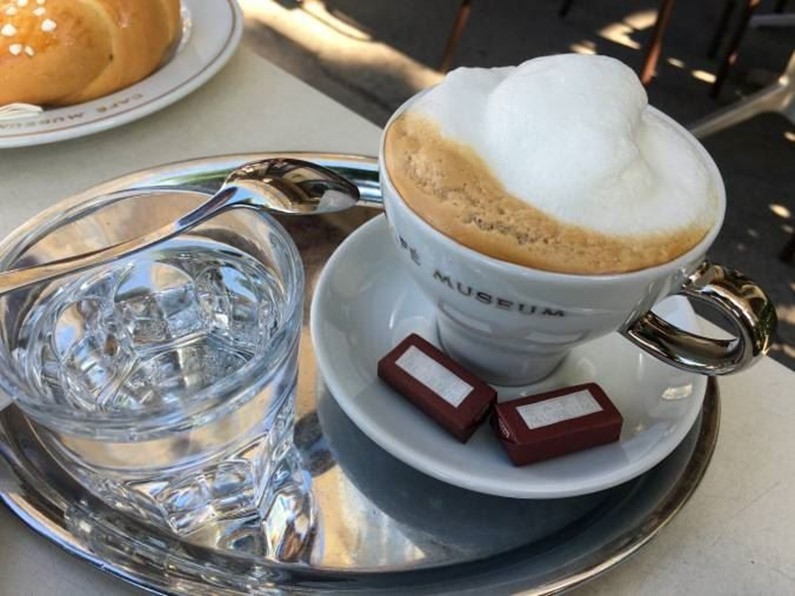
Melange is often mistaken for a cappuccino or simply called coffee with milk. In reality, melange coffee is a distinct beverage that originated in Vienna and remains one of the symbols of the city’s coffee culture.
Its history is traditionally associated with Yuriy Kulchytsky, a Ukrainian who played an important role in the development of Vienna’s coffee culture. Although many legends surround both Kulchytsky and the origins of melange, the drink itself has long become a classic far beyond the borders of Austria.
At first glance, it seems simple: coffee, milk, and a little milk foam. However, changing the proportions is enough to turn a melange into an entirely different coffee drink.
What Is Melange Coffee?
The classic Viennese melange is one of the best-known variations of Viennese coffee. It is made with espresso, steamed milk, and milk foam in roughly a 1:1 ratio. This balance gives the drink a smooth, creamy texture while preserving the rich flavor of the coffee.
The name itself explains its essence. The French word mélange means “mixture.” That’s exactly what this drink is—a harmonious blend in which coffee, milk, and foam complement one another rather than compete for attention.
Because of its similar ingredients, melange is often confused with cappuccino or latte. In reality, the differences are quite noticeable. Cappuccino usually contains a thicker layer of dense milk foam, giving it a stronger, more intense flavor. Latte, on the other hand, contains more milk, resulting in a milder coffee taste. Melange sits somewhere in between, offering a balanced combination where both the coffee and the milk remain clearly recognizable.
There is another common misconception. Sometimes people refer to Turkish coffee served in melange tableware and assume it is connected to the Viennese melange. In fact, these are two entirely different things. In the first case, “melange” refers to the style or color of the tableware, while in the second, it is the name of the coffee drink itself.
Melange Coffee Recipe and Preparation
Making melange coffee doesn’t require complicated techniques or rare ingredients. It starts with a shot of espresso or another strong black coffee. Milk is heated separately, with one portion left as steamed milk and the other frothed into a light milk foam. The steamed milk is then poured into the coffee, and the foam is carefully spooned on top.
The key is maintaining the right balance. Too much milk will make the drink closer to a latte, while too much foam will produce something more like a cappuccino. The classic melange recipe is built on the perfect harmony between coffee, milk, and airy foam.
Over time, cafés have created their own variations of the drink. Some replace sugar with honey, while others top it with whipped cream. For those who enjoy unique flavor combinations, there is also the Imperial Melange (Kaisermelange), which includes egg yolk, a little sugar, and a splash of brandy.
As a result, every coffee shop may serve melange slightly differently. What never changes, however, is its signature smooth taste, where coffee and milk complement each other perfectly.
How to Serve Melange
In traditional Viennese cafés, melange is served in a porcelain cup with a capacity of 180–250 ml (6–8.5 oz). Porcelain helps retain heat, while the milk foam keeps its light texture for longer. It is also customary to serve a glass of water alongside the coffee—a long-standing Viennese tradition.
Today, many customers prefer their coffee to go, and melange is no exception. In this case, not only the taste but also the choice of cup matters. A standard single-wall paper cup heats up quickly and retains less warmth, so double-wall paper cups are often preferred for milk-based coffee drinks.
The double-wall construction helps maintain the beverage’s temperature while keeping the outside of the cup comfortable to hold. The milk foam settles more slowly, and the coffee stays warm even if you enjoy it at a relaxed pace.
Which Cup Is Best for Melange?
For a classic melange, a 275 ml (9 oz) paper cup is usually the ideal choice. It provides enough space for espresso, steamed milk, and milk foam while maintaining the traditional proportions. If a café serves melange topped with whipped cream or offers signature variations, a 400 ml (14 oz) cup is a more suitable option.
For takeaway service, double-wall paper cups are worth considering. They retain heat for longer, feel comfortable to hold, and help preserve the drink’s texture. Corrugated paper cups are another excellent alternative.
If presentation is just as important to your coffee shop as the beverage itself, Future Cups manufactures double-wall paper cups in various sizes and also offers custom branding for businesses that want to showcase their own designs.
Final Thoughts
With melange, every detail matters. High-quality coffee, properly steamed milk, and the right paper cup all contribute equally to the overall drinking experience.
In the Future Cups catalog, you can find paper cups for every serving format, while the company’s blog offers even more useful articles and practical tips for coffee businesses.